
DeKalb Directory Collections by Year
The strongest documented run begins with the DeKalb city directory dated 1899. A county family-history guide reports volumes through the 1970s at DeKalb Public Library, while the NIU Regional History Center is another named holder of the 1899 volume. The same guide points to selected years through a library-licensed directory resource. Those facts describe known access points, not a promise that every annual issue survives.
| Collection | Years | Where Held | Access |
|---|---|---|---|
| DeKalb city directories | 1899 through the 1970s, reported range | DeKalb Public Library | Quiet Room and library assistance |
| DeKalb city directory | 1899 | NIU Regional History Center | Archive inquiry or appointment |
| Selected directory images | 1948, 1950, 1953, 1955, 1957, 1959 | Library licensed resource | Library access |
| DeKalb County directory | 1854-55 | Local-history collections | Confirm repository before visiting |
| Kett voters and taxpayers | 1876 | FamilySearch catalog and local collections | Online catalog or library/archive |
The current library description does not publish a full shelf list, publisher sequence, missing-year list, or verified reverse-directory range. Call ahead for one target year. Ask whether it is a book, scan, microfilm reel, or licensed database image, since the format controls whether a page can be saved or copied.
Note: A missing online year may still exist on a shelf, reel, archive finding aid, or licensed library database.
Search DeKalb Directories at DPL
The DeKalb Public Library genealogy and local-history desk is the practical first stop. Its Richard Ryan Quiet Room is on the main floor at 309 Oak Street. The library lists 815-756-9568 and regular building hours of Monday through Thursday 9 a.m. to 9 p.m., Friday and Saturday 9 a.m. to 5 p.m., and Sunday 1 p.m. to 5 p.m. Confirm research-room and holiday access before making a trip.
In-building tools broaden a city directory search. Ancestry Library Edition results can be emailed, while HeritageQuest Online includes city-directory material, census records, PERSI, and other genealogy sets. Newspapers.com library access and HeritageHub obituary and death-notice searching can test whether a printed name remained in DeKalb after the directory date. Staff can also point toward family histories, the Media Library, and the DeKalb County History Center catalog.
The current City of DeKalb staff directory is a useful contrast to the historical volumes.
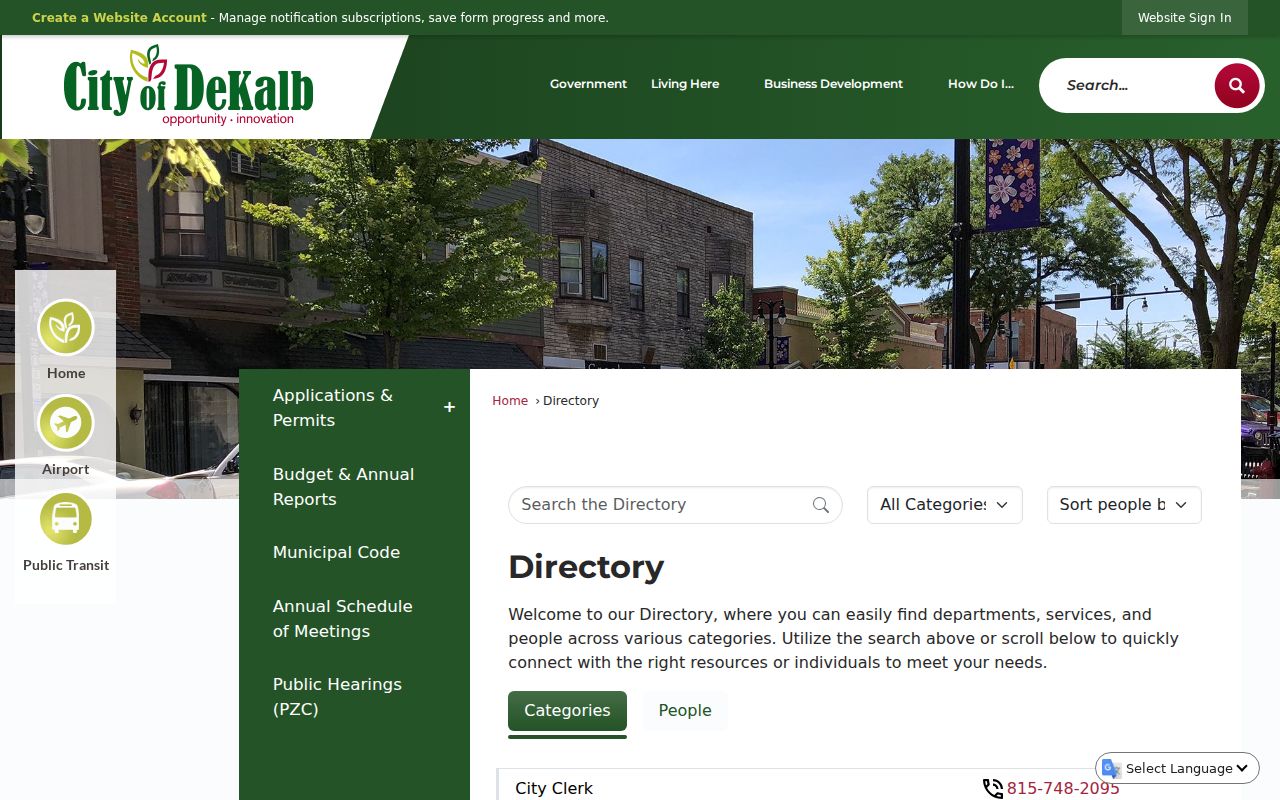
It identifies public offices and staff contacts, not households. Keep it separate from historical resident evidence and use it only to find the city office responsible for a record request.
Decode a DeKalb Directory Entry
A directory line is a dated transcription, not a full account of a person. Copy it exactly before expanding abbreviations. Record the title, year, publisher, page or image number, printed spelling, street number, business marker, and source format. If a phone number appears, treat it as historical. Co-location may suggest a household or shared business site, but it does not prove a family tie.
| Printed name | Exact spelling, initials, and any surname variant |
|---|---|
| Address | Street number, street form, room, business, or boarding clue |
| Work or group | Occupation, employer, church, school, or civic link if printed |
| Household context | Only the relationship or status the volume explicitly states |
| Source control | Publication, publisher, year, page, image, and access format |
Photograph or note the abbreviation page when the format permits. That key can distinguish a residence marker from boarding, an office, a spouse notation, or a trade abbreviation. Check the pages before and after the entry too, since columns and headings can shift between scans.
- Criss-cross directory
- A later street-order section that starts with an address and lists the printed name there.
- Householder index
- An address-based or household-based finding aid within some directory formats.
- Abbreviation key
- The volume's own list explaining shortened street, status, and work terms.
Try De Kalb Directory Spellings
Older print and optical character recognition can split the local name as “De Kalb.” Search both De Kalb and DeKalb, then try initials, middle names, former surnames, numbered-street variants, and abbreviated directions. A failed exact-name query may reflect type, scan quality, or indexing rather than absence.
This quirk matters beyond the title. The 1876 voters and taxpayers volume, nineteenth-century newspapers, archive descriptions, and the 1891 Sanborn record may use period forms. Preserve the spelling printed in the source, then add the modern form to research notes. That keeps a citation honest while making later searches easier.
Extend DeKalb Directory Findings
The Joiner History Room subject collections can test a directory match against more than 400 manuscript boxes, family files, resident photographs, road plats, atlases, maps, church and school records, telephone files, newspapers, and city directories. Its PastPerfect collection catalog is a useful first pass, but catalog text is only a finding aid.
Joiner is at the DeKalb County History Center in Sycamore. Listed hours are Tuesday through Friday 10 a.m. to 4 p.m. and Saturday noon to 3 p.m., with appointments suggested. Limited ancestor and property research is available. Up to one hour is listed without charge, while copying, scanning, mailing, or longer work is discussed before an order.
The visual DeKalb County history catalog shows how archive items are grouped and described.
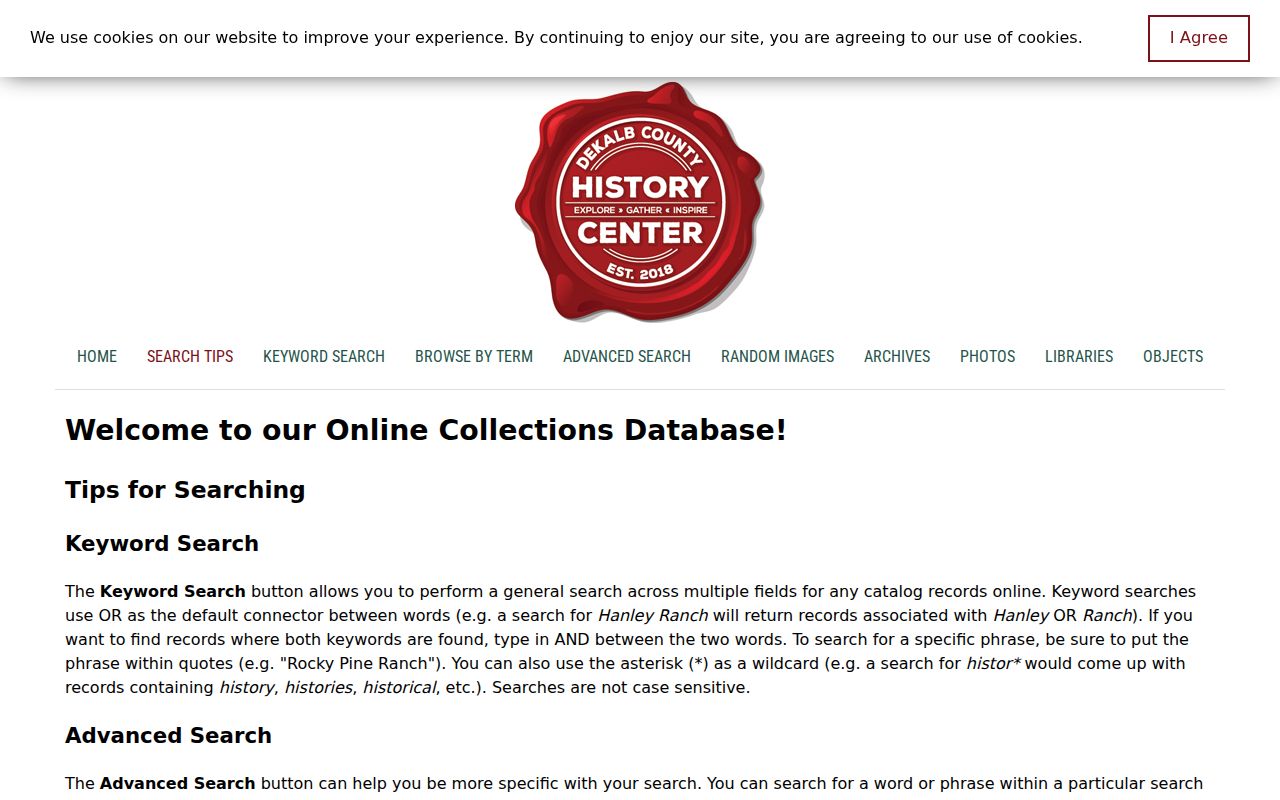
The catalog can identify a collection or subject term to request, then staff can confirm whether the underlying item contains a named person or address.
Use NIU for DeKalb Records
NIU Special Collections and Archives holds regional government, manuscript, university, and streetscape material at Founders Library. Some holdings are not fully cataloged, so a concise inquiry should include the exact name, date range, street, and known source. The Regional History Center and University Archives list 815-753-9392. Appointment rules and reading-room hours should be checked before travel.
The NIU collections page offers a clear entry into the archive's research and contact routes.
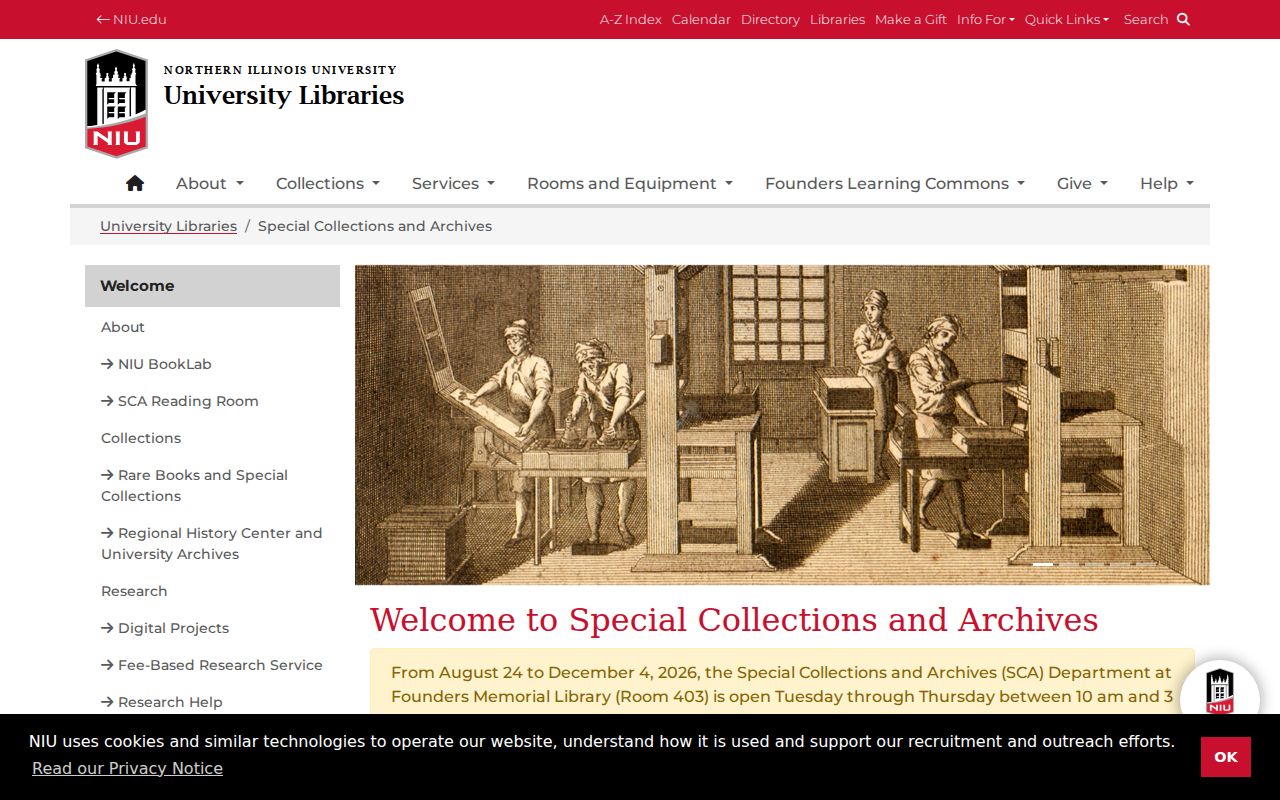
Use its finding aids to identify a collection first, then request the box, directory volume, yearbook, or streetscape item that can confirm the city directory clue.
IRAD at NIU adds historic assessor books, cemetery records, school series, vital-reporting accounts, township material, and other local-government records. The division between library, Joiner, NIU, and IRAD explains why a single web query rarely shows the whole DeKalb historical record.
Trace Family Through DeKalb Directories
Work from a documented entry rather than a loose surname. Compare the same person across consecutive available years, then pair that line with a census, newspaper notice, deed, probate file, obituary, or cemetery entry. Each independent source should agree on at least two useful details, such as street, relative, trade, or age range.
- Copy the first DeKalb city directory entry exactly, including year, page, street form, and abbreviations.
- Check the prior and next available years. Note a move, changed spelling, or disappearance only when the entries support it.
- Use a street-order section if the volume has one, but do not assume every printed name was an occupant.
- Pair directory years around a federal census year, then compare the household names and address context.
- Test the last known date against newspapers, obituaries, probate, cemetery records, and recorded land documents.
A person may vanish because of a move, death, nonpublication, missing volume, or a choice to remain unlisted. Do not select one cause without another dated record. For the modern name-verification side of the task, use the DeKalb resident lookup workflow.
Rare DeKalb Names Beyond Directories
Some local lists catch people who never appear cleanly in a city volume. Joiner describes poll books from 1859 to 1872, a 1902 Smallpox Vaccination List, a nurse registry from 1877 to 1935, Poor Farm material, military files, and a Registration of Farm Names covering 1915 to 1988. These are historical collections with narrow purposes, not current resident rolls.
The 1902 vaccination list is especially unusual. It may give a dated civic-name lead, but it cannot support any claim about present health or residence. Likewise, the Farm Name Registry can link a rural family, township, named farm, plat, newspaper item, and deed trail. Verify both through the archive description and the original item.
Note: Rare indexes are leads; cite the original page or archive item before making a family-history claim.
DeKalb Directory Record Timeline
The surviving research paths changed as DeKalb grew from handwritten county books to printed directories, microfilm, and online finding aids. The sequence helps determine which keeper is most likely to have a useful name record.
| Period | DeKalb record environment | Best next move |
|---|---|---|
| 1830s-1850s | Land, court, tax, and commissioners books | Use Sycamore offices and legal descriptions |
| 1860s-1900 | Newspapers, plats, poll books, early directories | Search both De Kalb and DeKalb |
| 1900s-1950s | City directories, assessor books, newspapers | Compare close years and page images |
| 1960s-1990s | Microfilm, local archives, and IRAD transfers | Use library and archive finding aids |
| 2000s-present | Web catalogs and dynamic portals | Confirm the underlying image or physical item |
The county-seat contest ended with Sycamore in 1839, long before the city directory run. That history still shapes custody: many records about DeKalb people sit in Sycamore, while NIU and the DeKalb Public Library hold other parts of the trail.